
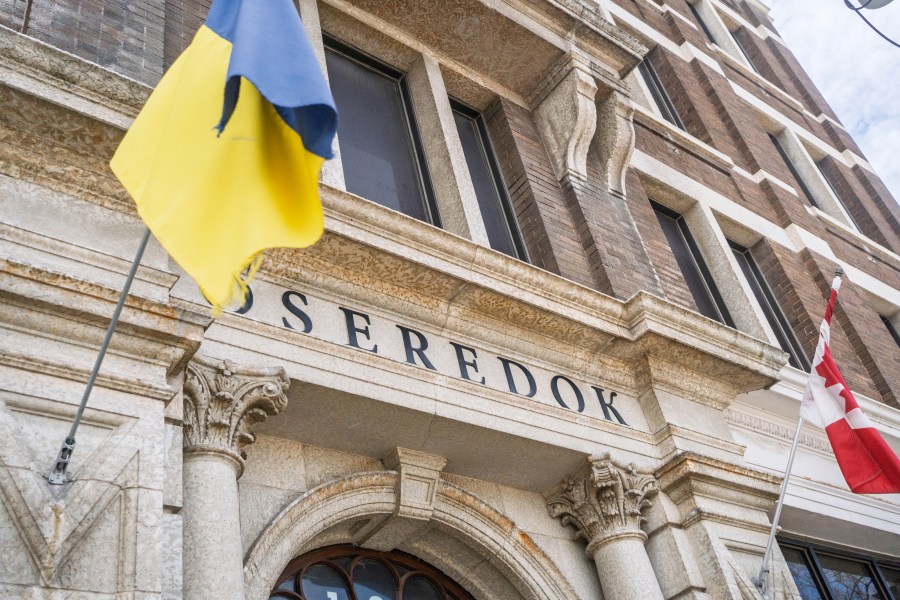
In a stunning brick building on Alexander Ave – whose facade has changed little since its construction in 1912 – the Oseredok Ukrainian Cultural Centre quietly carries the weight of history. As North America’s largest Ukrainian cultural non-profit, Oseredok has spent the last 80 years preserving artifacts, stories, and traditions from across the Ukrainian diaspora. And now, under the guidance of new Executive Director Brad Salyn, it’s entering a new chapter that aims to build bridges between generations and bring even more people through its doors.
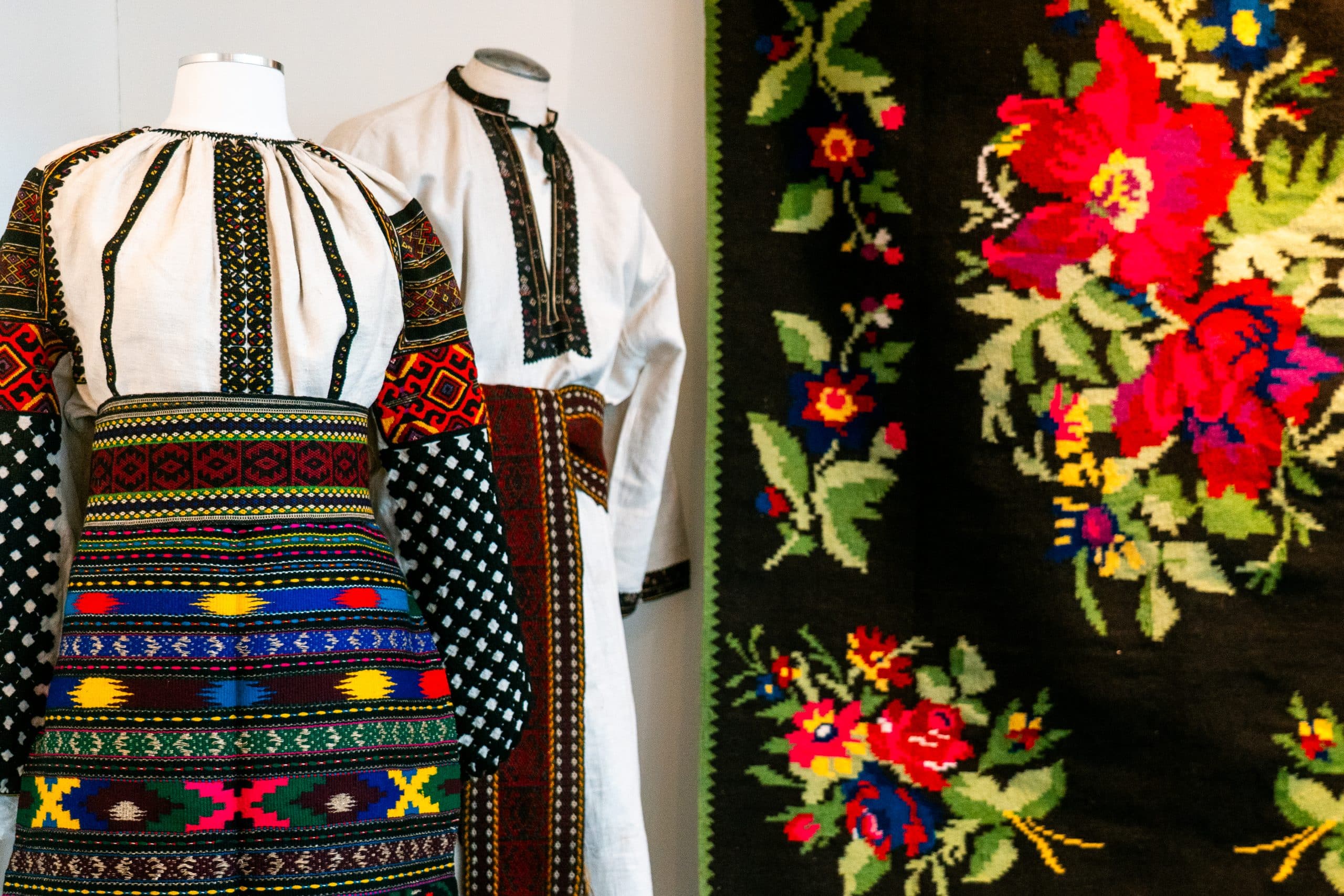
Oseredok was founded by a group of visionary Ukrainian immigrants who witnessed the destruction of war firsthand. Determined to protect their heritage, they came together to preserve the songs, literature, art, and sacred objects that might otherwise have been lost. Oseredok’s mission to preserve, educate, and maintain Ukrainian cultural history has held true, and today, that mission is stronger than ever. With historical archives, a museum, a gallery to showcase contemporary Ukrainian art, a boutique with Ukrainian goods, and plenty of space for community events, Oseredok (which means ‘centre’ in Ukrainian) is a hub of culture.
Since stepping into the Executive Director role two months ago, Brad Salyn has brought big dreams and a deep appreciation for the importance of cultural spaces like Oseredok. “There are a lot of cultural institutions that have not lasted 80 years, and sometimes it is a struggle to make people understand the importance,” he shares. “We survive on the strength and generosity of the community.”
Brad’s connection to Oseredok is personal — his family immigrated to Canada in 1903 as part of the early waves of Ukrainian settlers who helped shape Manitoba’s cultural landscape. Now, as Executive Director, he hopes to bring people together through cultural events that invite collaboration and connection. “We want this to be a gathering place,” he says. “A cultural home for anyone who identifies as Ukrainian Canadian, or is simply curious to learn more.”
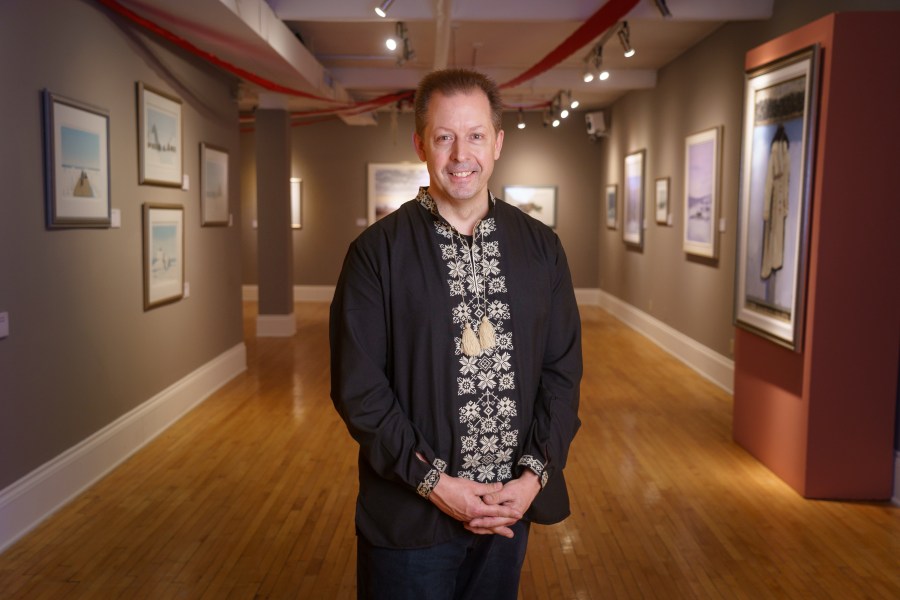
“Everything’s through that lens of building community and bringing people here.” – Brad Salyn
Centre’s programming reflects that inclusive vision. In addition to English language classes for newcomers and Ukrainian classes for Canadian-born Ukrainians eager to reconnect with their roots, Oseredok hosts everything from pysanka workshops to genealogy nights. Plans are underway for embroidery clubs, book clubs, dance classes, paint nights, and special events on First Fridays, all with the goal of making culture something that’s shared, celebrated, and created together. “Everything’s through that lens of building community and bringing people here,” shares Brad.
Those interested in history should check out Oseredok’s rotating exhibitions or historical archives in the library. Visitors can explore sacred texts from the 18th century, including a 1733 hymnal written in Church Slavonic, the liturgical language of many Ukrainian churches. There’s also a first edition of Kobzar, a book of poetry by Taras Shevchenko, Ukraine’s national poet and a symbol of unity across generations and immigration waves. First published in 1840, fewer than a handful of first editions still exist today. “There’s a sense of responsibility in keeping the history,” says Brad. “Once it’s lost, it’s lost.” They take that responsibility seriously, and as an internationally recognized steward of Ukrainian history, the world does too.
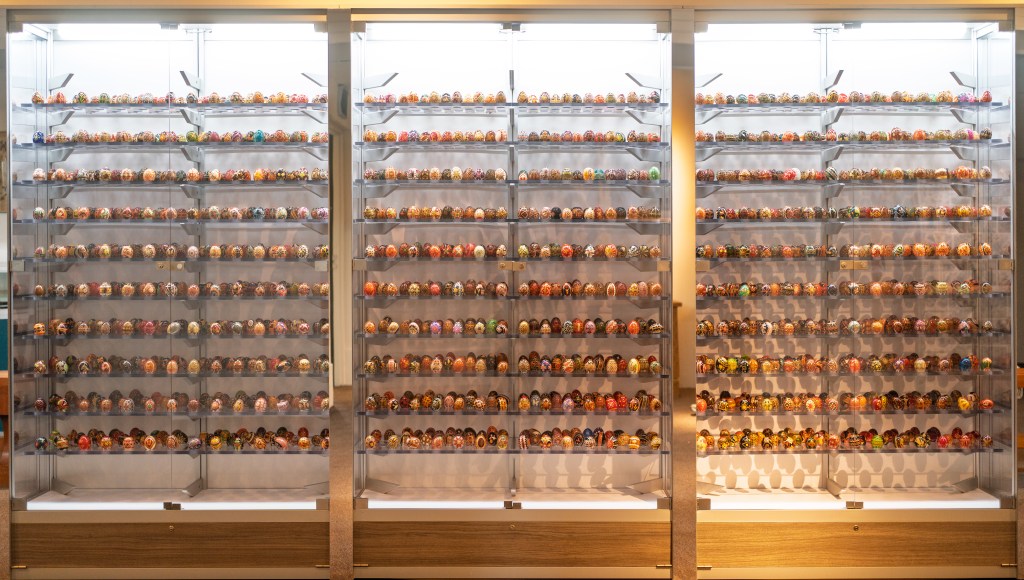
Other exhibitions at Oseredok bridge the gap between past and present, showcasing contemporary Ukrainian art. Check out the Peter Shostak Exhibition, Echoes of the Prairies, which captures picturesque landscapes of northern Alberta and runs until the end of May. The most striking collection, though, and pièce de résistance is the Pysanka exhibit. Glass cases filled with ornately decorated Ukrainian Easter eggs line the wall, creating a kaleidoscope of colours and textures. It’s the world’s largest public collection of Pysanka, and it’s well worth a visit. Each one tells a story, and collectively, they represent a tradition that’s been passed down through generations.
Despite the challenges that come with being a not-for-profit, Oseredok continues to thrive thanks to the dedication of its volunteers, the support of the community, and funding from memberships, boutique sales, sponsorships, and donations. Much of the programming is free or offered at a low cost and is designed to be accessible to all. Brad wants people to know they don’t have to wait for Folklorama to experience Ukrainian culture — Oseredok’s doors are open year-round. And while its mission is rooted in history, Oseredok is very much alive in the present, for anyone curious to connect through culture.
Check out Oseredok at 184 Alexander Ave East in the Exchange District.
Instagram: @oseredok.ca
Website: https://oseredok.ca/